
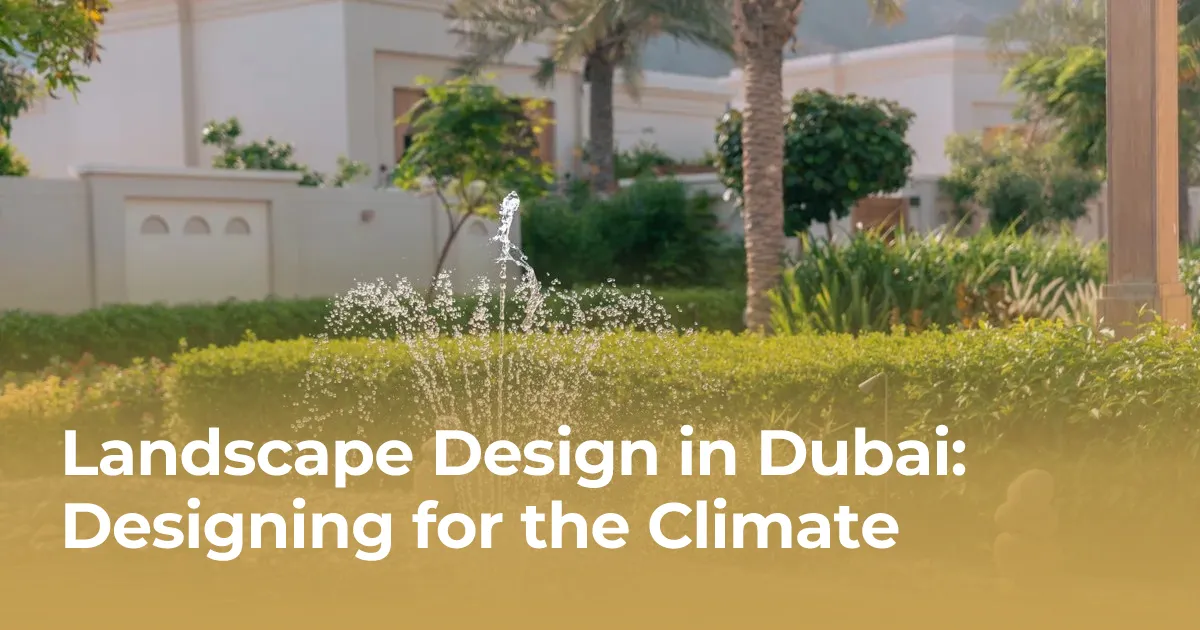
Landscape Design in Dubai: Designing for the Climate
August 27, 2026
Designing a landscape in Dubai starts with accepting the climate. For much of the year, daytime highs climb past 40°C, coastal humidity can hit 90% in summer, and rainfall averages around 100 mm per year. A garden that works in cooler climates can turn into a dry, cracked patchwork by August. Yet residents and businesses still expect outdoor spaces that are green, shaded, and comfortable beyond the winter months. That makes climate-responsive design essential, not optional.
For developers and property owners, the landscape shapes first impressions and property value. It also influences the microclimate of the site. Well-planned greenery can reduce cooling loads around buildings, manage stormwater, and improve long-term maintenance costs. Done badly, it becomes a running bill for water and replacements.
This article breaks down the main decisions in landscape design in Dubai: plant selection, irrigation, materials, and shading. You'll also learn how the pieces fit together in a coherent construction process.
Dubai's Harsh Climate: What It Means for Outdoor Spaces
Numbers matter here. Dubai's summer temperatures routinely exceed 40°C, and the sun stays intense from April through October. Rainfall is rare, totaling about 100 mm a year, mostly between November and March. Humidity adds another layer: near the coast, relative humidity often reaches 70–90% during summer mornings. These conditions combine with fast-draining sandy soil, which contains little organic matter.
This is why no temperate-climate template can be copied onto Dubai. Turf grass consumes too much water, exposed paving turns into a radiator, and standard irrigation methods lose enormous amounts to evaporation. A smart designer works with these constraints, not against them.
Aesthetic quality does not have to suffer. The approach is to choose hardy plants, cut down on water-hungry lawns, and use shading and light-colored surfaces to control heat. Dubai Municipality's Green Building Regulations and Specifications already push for water-efficient landscape design, and the UAE Ministry of Climate Change and Environment treats sustainable landscaping as part of the national agenda here.
How to Design Landscapes That Beat the Heat
Heat management starts before the first plant goes into the ground. Look at the sun path. South and west facades receive the strongest afternoon exposure, so place shade structures and tall, spreading trees there. Airflow matters as well. In Dubai, the sea breeze can make a shaded courtyard pleasant even in summer, but solid walls block that breeze. Perforated screens and open fencing allow horizontal airflow while keeping privacy.
- Use shade structures and tree canopies to block afternoon sun.
- Choose light-colored surfaces to reflect solar radiation.
- Keep air paths open so the prevailing wind can cool the site.
- Zone planting areas so water is applied only where roots need it.
Thermal mass is another hidden factor. Dark paving absorbs heat during the day and releases it after sunset, making a terrace unusable in the evening. Lighter concrete and natural stone stay cooler, and permeable pavers reduce heat storage while helping rainwater infiltrate into the ground. In coastal sites, salt-laden air affects both plants and materials, so the design has to account for that too.
Make each outdoor space work for its intended use. Put seating and high-traffic routes near buildings or under canopy. Leave the drier, low-maintenance zones further out, with their own plant palette and irrigation schedule. The result is a landscape that feels generous but consumes fewer resources.
Plant Selection: Native and Climate-Tolerant Species
Plant choice determines whether a project thrives or demands constant nursing. Native desert species should form the backbone. The Ghaf tree, date palm, acacia, and indigenous shrubs have evolved to survive extreme heat and limited water. They also reinforce a regional identity.
Upscale projects often want more variety, so climate-adapted species from similar environments are useful. Olive trees, bougainvillea, lantana, lemon verbena, and succulents all tolerate dry conditions. The key is matching each plant to the actual microclimate and grouping species by water needs. That avoids the common mistake of overwatering one group to keep another alive.
| Plant Type | Water Needs | Typical Use | Examples |
|---|---|---|---|
| Native desert trees | Very low | Shade, focal points, windbreaks | Ghaf, date palm, acacia |
| Drought-tolerant shrubs | Low | Borders, hedges, privacy | Tamarix, wattle, oleander |
| Mediterranean species | Moderate | Accent plants, courtyards | Olive, pomegranate, lavender |
| Ornamental ground covers | Low to moderate | Slopes, areas under trees | Bougainvillea, lantana, rosemary |
| Turf grass | High | Limited play areas, lawns | Bermuda grass, seashore paspalum |
Turf grass belongs only in small, purposeful areas. It needs frequent watering, mowing, and feeding. For most surfaces, decorative gravel, native ground covers, or stepping pavers produce a cleaner look with far less effort.
Smart Irrigation: Saving Water Without Sacrificing Greenery
Water is expensive and limited in the UAE. Drip irrigation is the standard for planted areas because it delivers water directly to the root zone, reducing losses from wind and evaporation. It also controls weeds and runoff, which is especially important in sandy soil.
For large developments, smart controllers add another layer of savings. They read weather data, soil moisture sensors, and plant water requirements, then adjust watering schedules automatically. The reduction in municipal water use can be substantial, which helps both the environment and operating budget.
Water quality should not be ignored. Many public and commercial landscapes in Dubai use treated sewage effluent, or gray water, for irrigation. Selecting pressure-compensating emitters and plants that tolerate reclaimed water is critical. Proper filtration prevents clogging and keeps the whole system working for years.
Coordination between landscape and civil engineering matters at the planning stage. A well-integrated design connects irrigation lines to the water source and drainage system from the start, instead of treating landscape as a later addition.
Hardscapes and Materials That Last in UAE Conditions
Paths, plazas, walls, and pavilions take full sun and, in coastal areas, salt spray. Material choices must balance durability, thermal comfort, and maintenance needs.
Natural stone such as sandstone and granite withstands heat but should be sealed to resist staining and salt damage. Concrete pavers are available in many shades; lighter colors reflect heat, which keeps the surface cooler. For raised decks and fencing, high-quality hardwoods can be used, but aluminum or stainless steel structures are more corrosion-resistant near the sea. Specifying stainless steel fixtures and powder-coated aluminum prevents unsightly rust streaks later on.
Finishes matter too. High-gloss surfaces cause glare and feel hotter in direct sun. A matte or brushed finish is more comfortable and practical for outdoor living areas.