
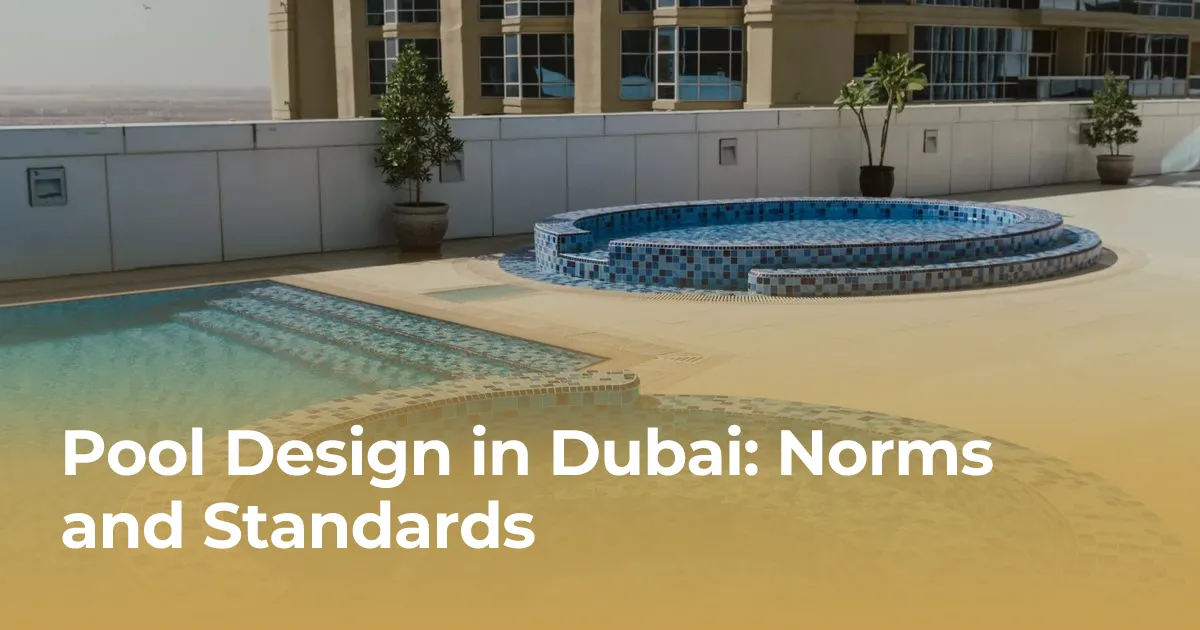
Pool Design in Dubai: Norms and Standards
August 27, 2026
Dubai's skyline keeps growing, and so does the market for high-end living spaces. Swimming pools are now a standard feature in villas, hotels, and residential communities. But designing a pool here is about a lot more than looks. You have to follow strict technical norms, local regulations, and climate-driven engineering decisions. Miss those details, and you could be looking at costly redesigns, permit delays, or safety hazards.
This guide explains the core standards and practical steps for pool design in Dubai. It covers the permitting process, structural concerns, mechanical systems, and safety requirements you need to know before you break ground, whether you're building a private pool or a hotel facility.
Why Pool Design in Dubai Is Different
The desert climate drives almost every decision. High temperatures, intense UV, and frequent dust storms shape material selection, water treatment, and energy systems. For example, pool finishes have to tolerate continuous thermal stress without fading or cracking. Evaporation is a constant battle; in summer, a 40 m² pool can lose over 100 liters of water per day. That makes automatic refill systems and pool covers worth every dirham.
Indoor pools bring condensation issues, so ventilation and dehumidification are critical. Outdoor pools need careful orientation to manage wind, sun exposure, and comfort around lounging areas. In short, a design borrowed from a colder climate rarely works without significant adaptation.
Clients in Dubai expect high-end finishes, smart control systems, and seamless integration with the landscape. The design must balance luxury with performance, a balance that local engineering teams understand well.
Regulatory Framework and Approvals
Pool construction in Dubai is governed by several authorities. Whether you're renovating a villa or building a hotel pool, you'll likely need approvals from Dubai Municipality, the developer, and sometimes utility providers.
A building permit application is usually the first step. The municipality reviews architectural and structural drawings against zoning rules and safety codes. Pools often require additional approvals for mechanical, electrical, and plumbing systems, especially if they connect to district cooling or public utilities. The Dubai Municipality (official portal) publishes guidelines that evolve frequently, so always verify the latest version.
The table below gives a simplified overview of the key regulatory areas.
| Area | Typical Authority | Key Concerns |
|---|---|---|
| Building permit | Dubai Municipality | Setbacks, plot coverage, structural safety |
| MEP approvals | Utility providers / DEWA | Electrical load, water supply, drainage |
| Safety compliance | Civil Defense | Fire safety, emergency access |
| Community NOC | Developer or community management | Design guidelines, aesthetics |
Don't assume a small private pool skips all this. Many villa communities require a No Objection Certificate (NOC) from the developer before any excavation begins. Skip that, and you risk fines and an order to remove the pool.
Structural and Civil Engineering Considerations
A pool's structure involves more than concrete thickness. Dubai's soil conditions and water table levels are critical. High groundwater pressure can cause buoyancy problems, especially for basement or indoor pools. An engineer must design proper drainage and tanking to counter hydrostatic pressure.
Reinforcement detailing matters as well. Large pools usually need movement joints to control cracking. Waterproofing is another big deal: one weak spot in the membrane can cause leaks that are costly to find and repair. The right waterproofing system depends on pool usage and soil chemistry. For concrete exposed to aggressive soils, a minimum reinforcement cover of 50 mm is often specified.
Bring a structural engineer into the process early. They'll calculate load paths, assess the impact on the building structure, and specify materials that meet local standards. Overloading a roof slab or placing a pool too close to a boundary wall has triggered many costly alterations across Dubai.
- Verify soil bearing capacity through a geotechnical survey.
- Design for the highest seasonal groundwater level, not today's water table.
- Use chloride-resistant concrete or adequate concrete cover to protect reinforcement.
- Plan for future settlement and differential movement.
Mechanical and Hydraulic Systems
A functional pool relies on a network of pumps, filters, heaters, and pipes. Hydraulic design determines water circulation efficiency, energy consumption, and maintenance costs. Poor pipe sizing raises flow resistance, forcing pumps to work harder and consume more electricity. Keep pipe velocities between 1.5 and 2.5 m/s to balance these factors.
Dubai's heat complicates water temperature. Owners often want cooling in summer and heating in winter, so dual-purpose equipment is common. Sizing heat pumps and chillers requires the pool's surface area, ambient air temperature, and solar exposure. Ignore these inputs and you get oversized or undersized machinery.
Filtration is another critical point. The turnover rate (how often all the water passes through the filter) is regulated by international standards. For residential pools, a six-hour turnover is a common requirement; for public pools, stricter rates such as two to three hours apply. Your mechanical engineer should produce a clear calculation sheet that the municipality can review.
Safety and Accessibility Standards
Pool safety is non-negotiable. In Dubai, residential pools must be enclosed by barriers that prevent children from getting in. Typical requirements call for fences or walls at least 1.2 meters high, with self-closing and self-latching gates. Gap specifications usually follow international guidelines like the International Building Code or ASTM standards.
Non-slip surfaces are critical. Polished natural stone looks luxurious but turns dangerously slippery when wet. Choose materials with a wet slip resistance of at least 0.6, especially on steps, shallow areas, and the pool surround. Inclined floors should have handrails for safe access.
Lighting affects safety too. Underwater lights, step lights, and perimeter fixtures help people navigate at night. All electrical equipment must be properly bonded and grounded. A qualified electrical engineer should design the lighting layout in line with local regulations.
According to WHO data, drowning is among the leading causes of injury-related death globally. Proper barriers and safety features in pool design can significantly reduce that risk.
Accessibility matters. Public and hotel pools typically need step-free entry or a platform lift for guests with reduced mobility. Dubai Building Code's accessibility requirements align with international standards, so plan these elements early.