 Supervision
Technical and Author's Supervision: What's the Difference and Who Provides Them

Technical and author's supervision on a construction site are often seen as one service: "someone from the design team comes and checks how it's being built." In reality, these are two distinct functions with different providers, tasks, and areas of responsibility. One monitors the quality of work and materials, the other ensures the construction doesn't deviate from the approved design. Many people search for "technical and author's supervision" as a single service—let's clarify the boundary.
Confusion can be costly for the client. When there's no technical supervision on site, defects surface during acceptance, and rework adds to the budget. When there's no author's supervision, the contractor makes "on-the-spot" changes to components and materials, and the building is formally completed but no longer matches the design solutions. Construction control and supervision address different risks, and one cannot substitute for the other.
Below we explain in simple terms how the two types of supervision differ, who is authorized to conduct them, what documents are prepared, and what makes up the cost of author's supervision. You'll get criteria to vet providers and set up control on your site in Tashkent or any other city in Uzbekistan.
How technical supervision differs from author's supervision: definitions and goals
Technical supervision in construction is independent quality control and compliance of works with standards. The specialist checks how structures are built, what materials are delivered, whether technologies and deadlines are met. They focus on the actual result on site.
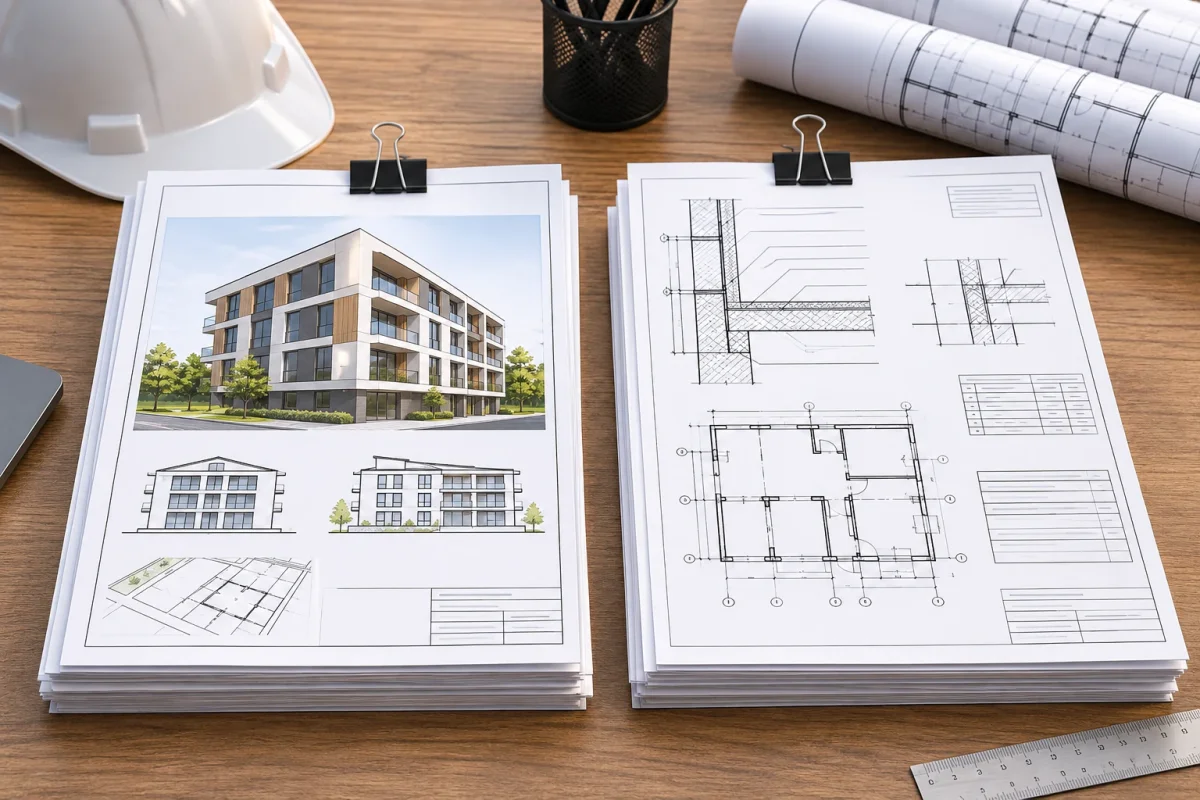
Author's supervision is control by the designer. The project author ensures the contractor doesn't deviate from the design documentation: components, cross-sections, facade and MEP solutions must match the drawings. The goal is to preserve the intent and functionality of the design solutions.
The difference is evident in three aspects:
- Who conducts it. Technical supervision—a specialized organization or engineer with the required qualifications. Author's supervision—the designer who developed the documentation.
- Subject. The first focuses on quality and standards, the second on compliance with the design.
- Outcome. Technical supervision records defects and violations; author's supervision approves or prohibits deviations from the design.
Both types work in parallel and do not replace each other. In full-cycle projects where architectural design services and construction are handled by one team, the "design—author's supervision" link is shorter in communication. The difference between these functions is well illustrated by the example of author's supervision Uzbekistan. Author's supervision in Uzbekistan is regulated separately from technical supervision, and this should be kept in mind when choosing providers.
Who is authorized to conduct technical supervision in construction: requirements for specialists and organizations
The question "who can perform technical supervision in construction" boils down to qualifications and confirmed authority. Supervision is conducted not by anyone with experience but by an engineer or organization with relevant education and permission for such work under current Uzbek regulations.
In practice, the client checks three things:
- availability of specialists in relevant fields—structures, MEP systems, finishing;
- a clear control methodology: what, when, and according to what documents is checked;
- willingness to issue acts and reports rather than give verbal advice.
Requirements for construction control and technical supervision are set out in regulatory documents (ShNK) and in urban planning legislation. Exact wording and references to specific clauses should be verified against the current edition: norms are updated, and misinterpretation can be costly. What ShNK is and decoding of norms is covered separately.
Also check independence. If technical supervision is affiliated with the contractor, control becomes a formality: quality issues don't fully reach the client. An independent engineer records the violation and reports it to you rather than "resolving the issue" within the construction site. Who conducts author's supervision is a separate question, addressed below.

Who conducts author's supervision and how it relates to the designer
Author's supervision is conducted by the design organization that developed the documentation, or its authorized representative—the project author. The logic is simple: only the author knows why a component is designed a certain way and what deviations are acceptable without compromising reliability.
The connection with the designer manifests in three situations. First: the contractor proposes replacing a material or structure—the author assesses whether the replacement would compromise the design. Second: a discrepancy in the drawings is found on site—the author issues a correction. Third: the client wants to change the layout or facade—the change goes through the design, not through verbal instructions to the foreman.
Author's supervision is linked by law and regulations in Uzbekistan to architectural activity: control of design solutions is part of the designer's responsibility for the result. Mandatory nature and procedure depend on the facility type and contract terms, so verify wording against the current edition of the law on architectural activity and the contract with the designer. For complex facilities, such as industrial workshop design Uzbekistan, author's supervision is especially important during structural installation.
If design and construction are handled by one company, author's supervision becomes internal but doesn't disappear: changes still require control by the design team. This format reduces the risk of discrepancies between drawings and site. For industrial facilities, such as a brake pad factory, author's supervision helps maintain technological equipment connections.
What technical supervision checks: quality of work, materials, deadlines, and compliance with standards
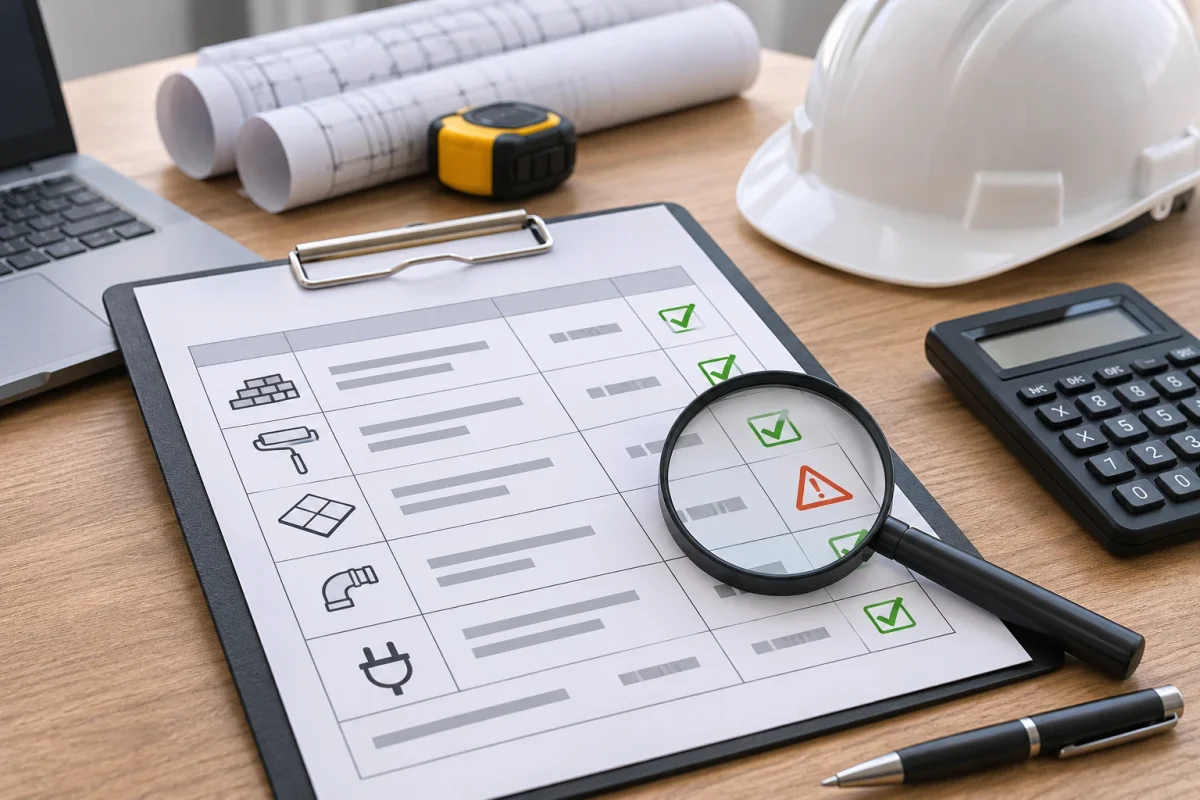
Technical supervision of construction works according to a schedule and checklist. At each stage, the specialist compares actual work with standards and design, records deviations, and requires them to be corrected before work is closed.
What falls under control:
- earthworks and foundation: geometry, compaction, reinforcement;
- monolithic and frame structures: formwork, concrete, embedded parts;
- MEP systems: routing, testing, fastening;
- materials: certificates, compliance with declared class;
- finishing and facades: evenness, sealing, junction details.
Deadlines are also in focus: supervision compares the actual schedule with the contractual one and warns when the contractor falls behind. A self-check for the client: ask for the work log and hidden work acts. If records appear retroactively and without photo documentation, site control was formal.
For industrial facilities, additional specific control applies: technological loads, ventilation, power supply. The approach to such sites differs from residential, and this should be considered when choosing a supervision provider. For warehouses and logistics, criteria are described in warehouse construction Uzbekistan. Technical supervision on collapsible soils requires separate checks—see foundation on swelling soils Uzbekistan.
What author's supervision does: control of construction compliance with design documentation
Author's supervision answers the question: is what was drawn actually built? A specialist from the design team visits the site, compares components and solutions with drawings, and records deviations.
Typical tasks:
- verifying compliance of structures and layouts with the design;
- approving substitutions of materials and equipment without losing design characteristics;
- issuing corrections if a discrepancy is found on site;
- participating in acceptance of critical stages together with technical supervision.
Author's supervision does not replace construction control: it doesn't check concrete quality instead of technical supervision and doesn't track quantities. Its scope is design solutions and their adherence. If the author's supervision specialist starts "commanding" work quality, roles blur and no one is accountable.
Forms of participation vary: regular visits, stage-based visits, or calls for critical operations. The more complex the facility, the more frequent the visits. For reconstruction, this is especially important because existing structures often differ from old drawings. Author's supervision in Uzbekistan during reconstruction without a survey is meaningless.
How supervision, general contractor, and developer relate: areas of responsibility
Three parties intersect on site. The developer pays and accepts the result, the general contractor builds and is responsible for quality and deadlines, supervision checks and records. Mixing roles breaks control.
| Party | Responsible for | Action upon violation |
|---|---|---|
| Developer | Budget, decisions, acceptance | Requires correction, accepts or rejects the stage |
| General contractor | Works, materials, deadlines, quality | Fixes defects, provides documents |
| Technical supervision | Quality and standards | Records violation, issues a notice |
| Author's supervision | Compliance with design | Approves or prohibits deviation |
A common client mistake: "The contractor will control everything themselves; they have a foreman." The risk is that the foreman is responsible for production, not independent verification. How to avoid: from the start, specify in the contract who conducts supervision, what acts they sign, and how notices are transmitted.
Another mistake: "We'll bring in supervision if something goes wrong." Bringing them in after hidden works are done won't restore the ability to check reinforcement or waterproofing. Control works at stages that are later closed.
How to organize both types of supervision on a site in Tashkent: stages and documents
Organizing supervision begins before going on site. The developer selects providers, signs contracts, and provides design and working documentation. Without up-to-date drawings, author's supervision cannot function.
The procedure is as follows:
- Appoint responsible persons and agree on a visit schedule.
- Approve the list of stages that are closed only with an act.
- Set up a supervision log and work log on site.
- Conduct scheduled and unscheduled visits for critical operations.
- Record comments and monitor correction deadlines.
- Participate in stage acceptance and final acceptance of the facility.
Documents that must appear: hidden work acts, inspection acts, notices and correction reports, test protocols. These papers later show whether control was real. If you need architectural supervision Dubai, the logic is the same: the designer visits the site and records deviations.
For existing facilities, diagnostics are useful before work begins: the building reconstruction Dubai direction of the company relies on structural surveys, and for Tashkent the logic is the same—first record the actual condition, then design and build. Survey helps catch defects before they cause rework, not after. With turnkey renovation Dubai, supervision is included in the contract from the start.
How much supervision costs and what determines the price
The cost of author's supervision and technical supervision are calculated differently, but both are tied to the scope of control. There is no single tariff: they calculate by area, by share of work cost, or by number of visits.
Guidelines for calculation in sums:
- By area. The rate per m² is multiplied by the facility area. For simple tasks the rate is lower; for complex structures, higher.
- By share of works. Supervision is calculated as a percentage of the estimated construction cost: the more complex the facility, the higher the share.
- By visits. The cost per visit is fixed, and the number of visits determines the schedule.
Example calculation: facility 600 m², supervision rate 1.5% of estimated work cost 1,200,000,000 sum. Total: 1,200,000,000 × 0.015 = 18,000,000 sum for the supervision period. This figure is a benchmark for comparing proposals, not an official price list.
Price is influenced by number of floors, structural complexity, number of MEP systems, distance to the site, and frequency of visits. If a contractor quotes a sum without a site visit and without a work estimate, you cannot compare proposals fairly. For projects with engineering, see MEP design Uzbekistan.
Frequently asked questions
What's the difference between technical and author's supervision in simple terms?
Technical supervision checks the quality of work and materials; author's supervision checks compliance of construction with the design. The first answers "is it done well and according to standards," the second—"is it done as drawn."
Who has the right to perform technical supervision in construction?
A specialized organization or engineer with relevant education and permission for such work under current Uzbek regulations. Check qualifications, control methodology, and independence from the contractor.
Is author's supervision mandatory by law and who pays for it?
The procedure depends on the type of facility and the terms of the contract; for exact requirements, see the law on architectural activity and urban planning regulations. Supervision is paid for by the developer: they commission the oversight and receive the reports.
Can one company handle both design and supervision?
Yes. The designer, by definition, carries out author's supervision of their own design. Technical supervision, however, must remain independent of the contractor; otherwise oversight loses its meaning.
How often should specialists visit the site, and what reports are drawn up?
Frequency depends on the stage and complexity of the facility: critical operations are always inspected, while routine visits follow a schedule. Documentation includes concealed work certificates, inspection reports, remediation notices, and reports on corrective actions taken.
How much does technical and author's supervision cost in Tashkent?
As a guideline, it's a percentage of the estimated construction cost or a rate per m²; the exact amount is calculated after inspecting the facility and reviewing the estimate. To compare proposals, ask for quotes based on the same input data. Keep in mind that design documentation development and supervision are often bundled together.
Common client mistakes when organizing supervision
Most supervision problems begin not on the site but at the contract-signing stage. Below are the most common mistakes, along with what each one costs you.
| Mistake | What it risks | How to avoid it |
|---|---|---|
| "The foreman will handle supervision too" | The builder inspects their own work: hidden defects surface a year later, and rework comes out of your pocket | Supervision is a separate contract with an independent party not affiliated with the contractor |
| "Come once a month and take a look" | An entire stage (screed, rebar, waterproofing) gets closed out without inspection; opening it up later costs more | Tie the number of visits to construction stages, not to the calendar |
| A contract with no report format or response deadlines | Issues are raised "verbally," the contractor ignores them, and you have no proof | Specify: a written report within 1–2 business days, plus a deadline for fixing the issues |
| Author's supervision is ordered, but the designer never shows up | Decisions on site are made by the foreman "on the fly," and the facility drifts from the design | Include a schedule of author's visits and a supervision log in the design contract |
| No access to concealed works | Rebar, embedded items, and waterproofing are accepted based on photos from the contractor | Request an inspection before closure: at least 24 hours ahead, before concrete pouring or plastering |
Check your supervision contract against four points. Is there a visit schedule tied to construction stages? Is the report format specified? Is a response deadline for issues stated? Is there a right to stop work until issues are resolved? If even one of these is missing, the provider can technically show up once and call it done. Without a clear contract, turnkey construction supervision becomes a formality.
Concealed work acceptance checklist
Concealed works are things you won't be able to see after the next stage without tearing something open. They must be accepted before closure; otherwise any defect stays in the structure forever. Below are five checks you can perform on site together with the supervision representative.
Rebar before concrete pouring. Verify the diameter, spacing, and grade of rebar against the design → measure the spacing with a tape in three places → a deviation of more than 20 mm from the design value is grounds to stop the pour.
Embedded items for utilities. Go through the outlet and connection plan → check that sleeves and back boxes are at the design elevations → relocating them in concrete after plastering is expensive.
Waterproofing in wet areas. Inspect the bathroom before tiling → check the number of layers and the wall overlap (usually at least 200 mm) → do a 24-hour water test: no dampness should appear on the floor below under the wet spot.
Screed and slopes. Place a two-meter straightedge → the gap beneath it should be no more than 2 mm per 2 m for finish coatings → check the slope toward the drain in the shower with a level.
Masonry joints and bond. Inspect corners and junctions → vertical joints must not align in height between adjacent courses → a continuous vertical joint spanning 3–4 courses means a crack down the road.
Record every check in a concealed work certificate with photos and signatures. One signed certificate per stage saves you an argument six months later. For facilities with non-standard structures, such as the Bostanlyk resort zone, the checklist is supplemented with an inspection of external utility networks.
Conclusion: how to set up control without unnecessary rework
Technical and author's supervision cover different risks, and a site needs both: one upholds quality and code compliance, the other safeguards design decisions. Set up control before work begins, define roles in the contract, and check documents stage by stage. Turnkey construction supervision is convenient because design, construction, and oversight are handled by one team with unified standards. This is especially noticeable on complex facilities: for example, during construction of a private clinic, author's supervision keeps medical requirements in check.
Another guideline when choosing: look at how the provider has handled similar facilities. our Dubai projects and about ZeroMax Group show what challenges the team has already tackled; the qualifications of the specialists are covered in ZeroMax Group certificates. If you need interior design services with author's supervision, that's also worth discussing at the outset.
ZeroMax Group provides turnkey construction: design, estimates, construction, and author's supervision by its own design team. This means fewer discrepancies between the drawing and the site. To arrange supervision for your facility, submit a request via ZeroMax Group contacts or call +971585380110.