
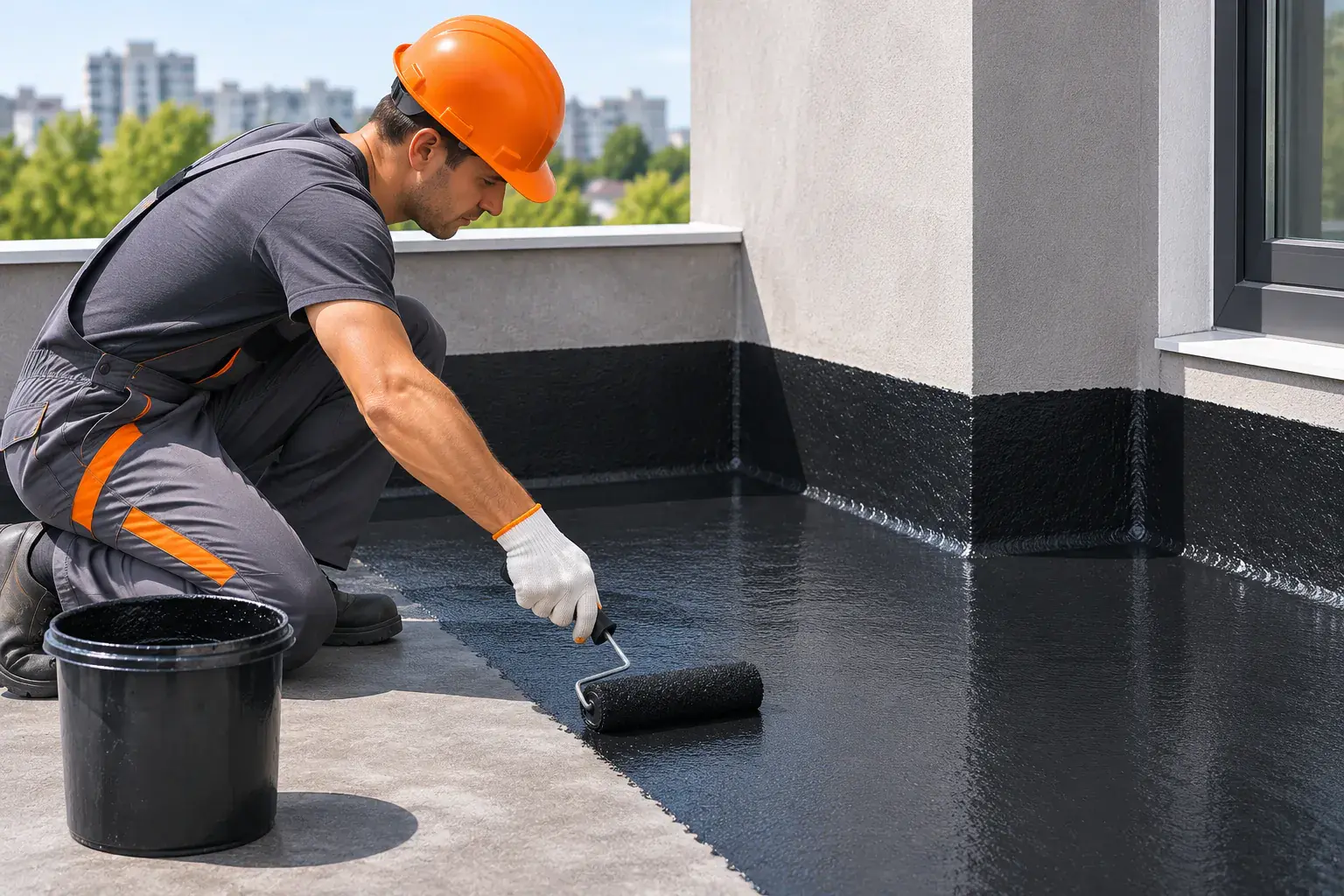
Waterproofing Services in Dubai
Waterproofing in Dubai for basements, foundations, roofs, wet areas, balconies, pools and tanks, designed for high groundwater, heat and humidity.
- 10+
- Years of experience
- 15
- Specialists
- 6
- Disciplines
- 90+
- Projects
Where waterproofing is needed
Every building has several zones where water must be kept out or kept in. In Dubai the most common are:
- 01Basements, foundations and below-ground walls
- 02Flat roofs, terraces and podium decks
- 03Bathrooms, kitchens, laundries and other wet areas
- 04Balconies and planters
- 05Swimming pools, water features and water tanks
- 06Car park ramps and slabs
Waterproofing systems we use
The system depends on the zone and the water pressure it faces. Below ground we use sheet membranes, bonded systems or crystalline treatments, with waterstops at construction joints. On roofs we use bitumen or synthetic membranes or liquid-applied systems protected from UV. In wet areas, cementitious or liquid membranes go under the tiles, with reinforcing tape at corners and around drains. Pools and potable water tanks need systems approved for continuous immersion and, for tanks, for contact with drinking water.
Whatever the system, the details matter most: junctions, penetrations, drains and upstands are where water usually gets in.
How basement and foundation waterproofing works
On a new build, the waterproofing is designed together with the foundations and installed before backfilling, with the groundwater kept down by dewatering during construction. On an existing building with a damp basement, we first find the source: groundwater pressure, a failed joint, a leaking pipe or condensation. Depending on the cause, we use internal systems such as crystalline treatment and injection of cracks and joints, or open up the outside where that is possible.
Every system is tested where it can be: flood tests on roofs and wet areas, inspection of membranes before they are covered.
Dubai ground and climate conditions
Much of Dubai is built on sandy and sabkha soils with a high water table, especially near the coast and the Creek. The groundwater contains chlorides and sulphates that attack concrete and steel, so below-ground waterproofing also protects the structure itself. Above ground, the main enemies are heat, UV and the daily expansion and contraction of roofs, together with condensation from AC systems in wet areas and ceilings.
What affects the cost
The cost of waterproofing depends on the zone and area, the water pressure, the chosen system, the condition of the substrate and, on existing buildings, the amount of removal and repair needed to reach it. We give an estimate after an inspection.
How we run a project
A clear route from the first meeting to handover of the finished building.
- 1
Consultation & site assessment
We discuss the brief, budget and constraints, then survey and measure the site.
- 2
Architectural design
We develop the concept and a full set of project documentation.
- 3
Approvals & permits
We clear the government approvals and obtain the required permits.
- 4
Estimate & planning
We prepare a detailed cost estimate, a work schedule and a delivery plan.
- 5
Construction & handover
We build and supervise on site, then hand over the finished building with full documentation.
Questions and answers
Short answers to the questions clients ask most often before a project starts. If yours is not here, write to us and we will advise on your project.
Can a basement be waterproofed from the inside?
Yes, with crystalline systems, injections and internal tanking, especially when the outside cannot be excavated. External waterproofing is preferable on new builds.
Does an apartment bathroom need waterproofing?
Yes. Tiles and grout are not watertight, and without a membrane water reaches the slab and the apartment below. It should be flood-tested before tiling.
Why is the basement damp if there are no visible leaks?
It can be groundwater pushing through the slab, capillary rise in walls or condensation on cold surfaces. A moisture survey shows which, and the fix depends on it.
Do you waterproof swimming pools?
Yes. Pools need a system suited to continuous immersion and pool chemicals, installed before the tiles and tested by filling.
Every remarkable project begins with a first step
From concept to delivery — we create architecture that unites aesthetics, function and engineering precision.