Project Approval in Dubai Step by Step, From Plot to Completion

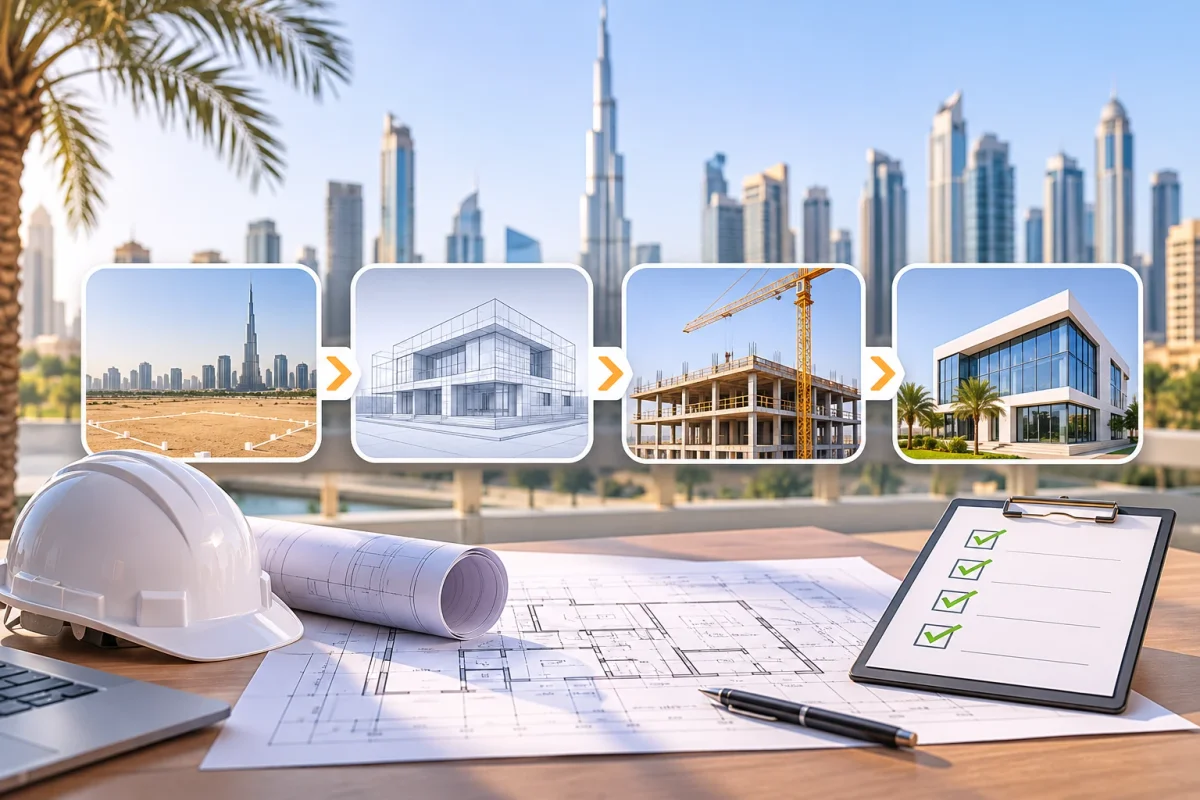
Project approval in Dubai runs through the authority that controls your plot: Dubai Municipality, the Dubai Development Authority (DDA), Trakhees or DIEZ. In parallel, the service authorities issue their own NOCs: Civil Defence, RTA, DEWA, the telecom operators and sometimes the civil aviation authority. The route is always the same: plot data, concept, final design with NOCs, building permit, site inspections and a final joint inspection that ends with the completion certificate. A registered consultant files everything, not the owner.
Below we walk through that route step by step: who is responsible for what, in which order the approvals come and where projects lose the most time. Fees and the full document list have their own articles. Here the focus is the route itself: which authorities a project passes through and in what sequence project approval in Dubai happens.
Who Approves the Project: It Depends on the Plot
The first question is not "which drawings do we need" but "whose land is this". Several authorities in Dubai issue building permits, and each has its own portal, forms and steps. You can see the jurisdiction on the plot document: the affection plan in Dubai Municipality areas or the site plan in DDA areas. The same document shows the permitted use, the allowed height and the planning rules.
| Where the plot is | Who runs the approval | What is specific |
|---|---|---|
| Most of the emirate | Dubai Municipality | Submission through the Build in Dubai platform |
| DDA zones (Dubai Internet City, Dubai Science Park, DIFC and others) | Dubai Development Authority | Separate steps: preliminary and final design approval, then the permit |
| Jebel Ali Free Zone and other PCFC areas | Trakhees | A Project ID and a concept design NOC come first |
| Dubai Silicon Oasis and other economic zones | DIEZ | Own regulations, shared permit platform |
There is a third level too: the master developer. In large communities it publishes its own building guidelines and reviews the design before it goes to the authority. In DIFC, for example, you first need DIFC's own approvals and only then go to DDA.
The technical rules, however, are shared. The Dubai Building Code applies across the whole emirate, free zones included, and the Al Sa'fat green building standard at Silver level is mandatory for all new buildings. So a design made to the DBC does not have to be redone if the authority changes. Only the procedure changes.
The Unified Platform and the Consultant's Role
Since 2022, building permits from Dubai Municipality, DDA, Trakhees and DIEZ have been brought together on a single electronic platform. Civil Defence, RTA, DEWA, Etisalat and du are linked to it, so many preliminary approvals can be obtained in one window. In October 2023 Dubai Municipality launched the Build in Dubai portal, which brought all construction services together, and the Dubai BPS app mirrors them on a phone.
The plot owner does not file anything in this system. The owner appoints a consultant, that is a design firm registered with Dubai Municipality, and signs an appointment letter. The consultant prepares the design, uploads it, answers the comments and manages the technical side of construction. The consultant's category limits the building height: third category up to G+4, second up to G+12, first category with no limit. Check the category before you sign, or you may find out at submission that your consultant cannot take your building.
Approval Stages: How Project Approval in Dubai Works
The approval stages are similar across authorities. The form names differ, but the logic is the same: first the authorities approve the idea, then the full design, then they issue the permit and control construction.
| Stage | What happens | Result |
|---|---|---|
| 1. Plot data | Affection plan or site plan, master developer guidelines | Use, height and setbacks are clear |
| 2. Concept | Preliminary design approval (optional at DM, a separate step at DDA and Trakhees) | Massing and layouts agreed |
| 3. Final design and NOCs | Full set by discipline, NOCs from service authorities | Approved drawings |
| 4. Building permit | Fee payment, permit issued | Building permit |
| 5. Setting out | A surveyor marks the building on the plot | Demarcation certificate, works start |
| 6. Site inspections | Foundation and structure checks | Inspection records |
| 7. Completion | Final joint inspection | Completion certificate, utility connection |
Concept and Preliminary Approval
At this step the consultant presents the concept design: footprint, number of floors, areas, access points. At Dubai Municipality preliminary design approval is optional, but on large projects it is worth doing: comments on massing are cheaper to fix at sketch stage than after the detailed drawings. At DDA this step is called Preliminary Design Approval, at Trakhees it is the Concept Design NOC, and you cannot move on without it.
Final Design and the Permit
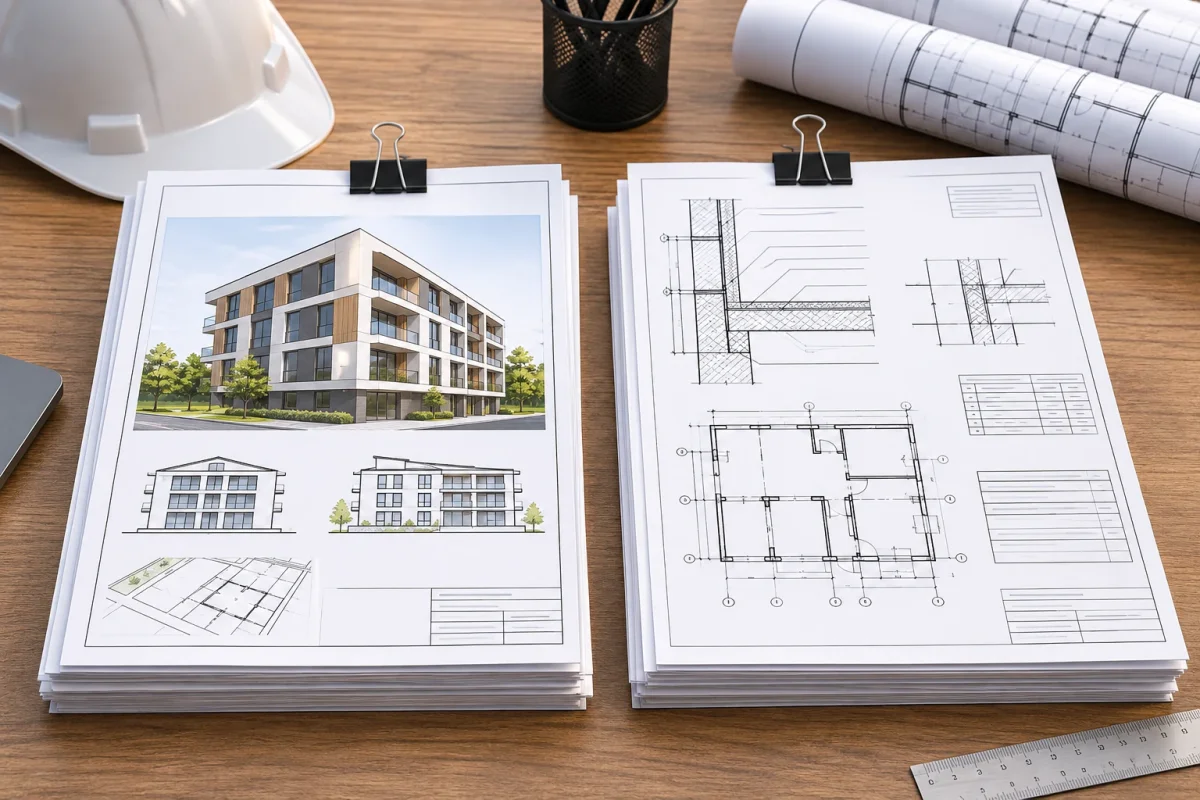
Next the consultant assembles the full set of documents and permit drawings: architecture, structure, MEP, fire safety. It is reviewed by discipline, and each authority issues its own decision. Once all NOCs are in, the authority approves the drawings. At Dubai Municipality the permit must be obtained within 9 months of approval, otherwise the approval has to be extended (up to four times, by 6 months each). The permit itself is valid for 2 years. At DDA the final building permit is requested by the contractor and is valid for 4 years. We cover how building permit fees are calculated in a separate article.
Construction and Completion
Once the permit is issued, a surveyor sets out the building on the plot and issues the demarcation certificate. Only then can works start. During construction, inspectors check the foundations and the structure. When the building is ready, a joint committee inspects it: Dubai Municipality, Dubai Civil Defence, RTA, Etisalat and du. Three documents follow: the building completion certificate, the Civil Defence completion certificate and the final survey certificate. Only with these can you arrange the DEWA connection and occupy the building.
Which NOCs You Need and From Whom
An NOC (No Objection Certificate) is a letter from an authority saying it has no objection to the design. The set depends on the project, but the core group repeats almost every time:
- Dubai Civil Defence - fire safety under the UAE Fire and Life Safety Code: evacuation, fire fighting systems, facades. Approval is needed before the permit, and Civil Defence inspects the building again before handover.
- RTA - access, parking and the gate level of the plot. If the project generates more than 150 peak-hour trips, a Traffic Impact Study (TIS) is required, and no permit is issued until it is approved.
- DEWA - electricity and water supply and design loads.
- Etisalat and du - telecom networks and cable entry.
- DCAA - for buildings in aviation easement areas: the height of both the cranes and the building.
- Others - district cooling, sewerage from the master developer or DM, the environment department for pools and industrial projects, a separate authority for mosques.
For Dubai Municipality projects most NOCs are requested through the same platform, and the consultant sees the status of each one. In DDA zones the NOC list is written into the final design approval requirements, and the application is not accepted while even one is missing.
How Long Project Approval in Dubai Takes
The authorities do not set an overall time "from plot to keys". There are only service levels for each step. At Dubai Municipality a complete permit application is reviewed in 3 working days, preliminary design approval also takes 3, a structural inspection 3, and the completion certificate 3 working days when the contractor or consultant applies. At DDA final design approval takes 5 working days, and Trakhees targets 10 working days per review.
In practice the time goes not on review but on comments. Each return for revision restarts the clock, and NOCs from several authorities run in parallel but at different speeds. So a small villa has a short path to the permit, while a multi-storey building with a dozen NOCs takes noticeably longer. For comparison, in the Doing Business 2020 ranking Dubai was third in the world for dealing with construction permits: 11 procedures and 47.5 days for a typical warehouse.
Dubai keeps speeding up the process. In August 2026 Dubai Municipality announced an AI agent in Build in Dubai that checks drawings against the Dubai Building Code on its own. For now it covers only private and investment villas. All other projects are reviewed by engineers.
If the Design Changes After the Permit
A project rarely reaches handover without changes. The client adds a floor, changes the use of rooms, moves the pool or revises the facade. Every such decision is a new application, not an on-site fix. Dubai Municipality has a separate service for this: a permit for modifications or additions to a building. The consultant updates the drawings, and the authorities whose part is affected issue their NOCs again.
Small changes usually involve one or two authorities. Moving a plant room, for example, is checked by Civil Defence, and a new access point by RTA. A change in areas or floors goes through the authority in full and may need a new traffic study. So big decisions are best made before final design approval: on paper they take days, on site they stop the works.
Changing the consultant or contractor is a separate case. It is also done through the platform, and until the change is registered the new party cannot sign documents for the project.
Common Mistakes
- Starting the design before checking jurisdiction. Drawings made for Dubai Municipality have to be reworked if the plot turns out to be in a DDA or Trakhees zone.
- Skipping the master developer's rules. The authority may approve the design while the community does not, and then works stop.
- Hiring a consultant of the wrong category. A building above G+12 needs a first category consultant.
- Leaving fire safety to the end. Civil Defence requirements affect stairs, facades and plant rooms, and late comments change the architecture.
- Delaying the permit after drawings are approved. After 9 months the approval must be extended, and the rules may have changed by then.
- Changing the design on site without approval. Any change to the structure, areas or facade goes back through the consultant and the authority, otherwise the committee will not issue the completion certificate.
Frequently Asked Questions
Can the owner submit the design for approval directly?
No. An application for a new building is filed by a registered consultant or contractor. The owner appoints the consultant and signs the appointment documents.
Is preliminary design approval required?
At Dubai Municipality it is optional, but it helps settle massing questions before the detailed drawings. At DDA and Trakhees it is a mandatory step before the final design.
Does the Dubai Building Code apply in free zones?
Yes. The code applies across the whole emirate, including free zones and DIFC. The procedures and portals differ, not the technical rules.
What happens if you build without a permit?
The authorities stop the works, issue a fine and require the owner to fix the violation at their own cost. Without a permit the building will not pass the final inspection and will not be connected to utilities.
How ZeroMax Helps With Approvals
Project approval in Dubai goes faster when the design is made from day one for the right authority and the service authorities. ZeroMax Group prepares the concept and the full design to the Dubai Building Code, collects the NOCs, handles correspondence with the authorities and answers their comments, and on site provides technical supervision and author supervision. A licensed contractor builds, and we make sure the building matches the approved design. To discuss your plot and its approval route, contact us.